How Can I Get More Followers on Facebook? A Daily System for Business Pages
By Anastasios Kosulin · Published November 23, 2026
If you're asking how can I get more followers on Facebook, the answer is a daily habit: post something new every day, lead with short video, and answer every comment. Skip bought followers entirely. They push the number up and make the page worse.
Most advice stops at a list of tips. This guide treats growth as a publishing system for a business page. You'll see what one day of content looks like, a week that doesn't repeat itself, how to turn comments into customers, straight answers on the 20 rule and paid views, and a 30-day plan you can start this week. If you sell online, our daily guide to social media marketing for ecommerce covers the bigger picture.
Why followers matter less than reach and the right audience
The followers worth having are people who could buy from you, and a few hundred of them beat thousands of strangers. Aim for the right audience first and a bigger number second.
How do you tell real growth from vanity numbers? Look at what moves around the count. New follows should show up after specific posts. People should ask about price, sizes or shipping in the comments. Clicks to your website should rise. If the follower count climbs and none of that changes, the number isn't bringing you customers.
This changes what you post. A random meme might pull in follows from people who'll never need your product. A clear post about the problem your product solves pulls in fewer people, and better ones.
What content gets a Facebook page followed: Reels, carousels and posts
Reels are your best shot at reaching people who don't follow you yet, and posts, carousels and Stories are what convince them to stay. A page needs both.
Facebook can show Reels to people outside your follower list, so a good one can travel further than a photo post. Once someone lands on your page, the rest of your feed has to give them a reason to tap Follow. A page that's all Reels and no product feels empty. A page that's all product shots feels like a catalog.
Here's what each format does for a business page:
- Reels: short vertical video with the hook in the first frame. A POV scene, a reveal or a before-and-after works well for products.
- Carousels: a few slides that tell one small story, like the problem, the fix and the result.
- Product posts: one clean image of a real product and a plain caption that says what it is and who it's for.
- Stories: quick daily updates that keep you near the top of your followers' screens.
- First comment: your own comment under each post with the link or the detail the caption left out.
How often should you post on Facebook?
Once a day is a realistic target for a business page, as long as you can keep it up for months. A page that shows up daily teaches people to expect it. Three posts on Monday and silence for a month does the opposite.
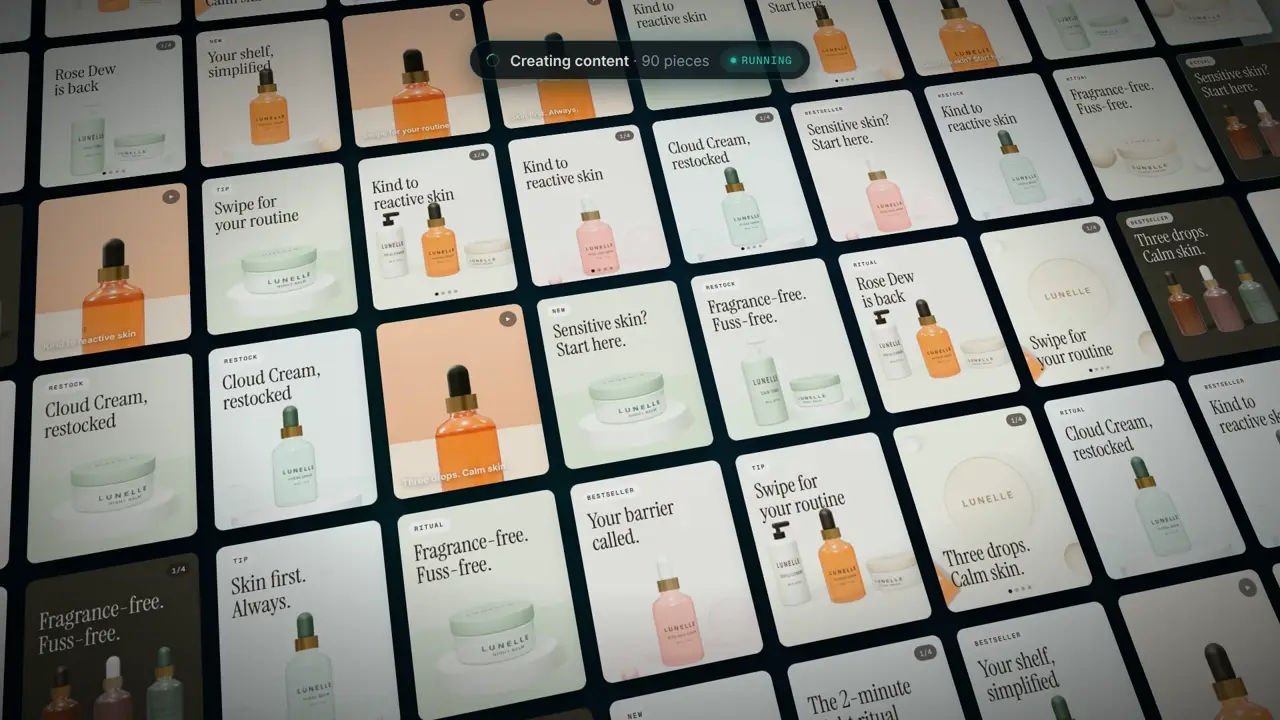
It helps to see what one day can hold. A daily Bravio set has two product images and a four-slide carousel, and the Growth and Agency plans add a short vertical video every day. Spread across Facebook, that's a feed post, a Story, a carousel and a Reel, each saying something different.
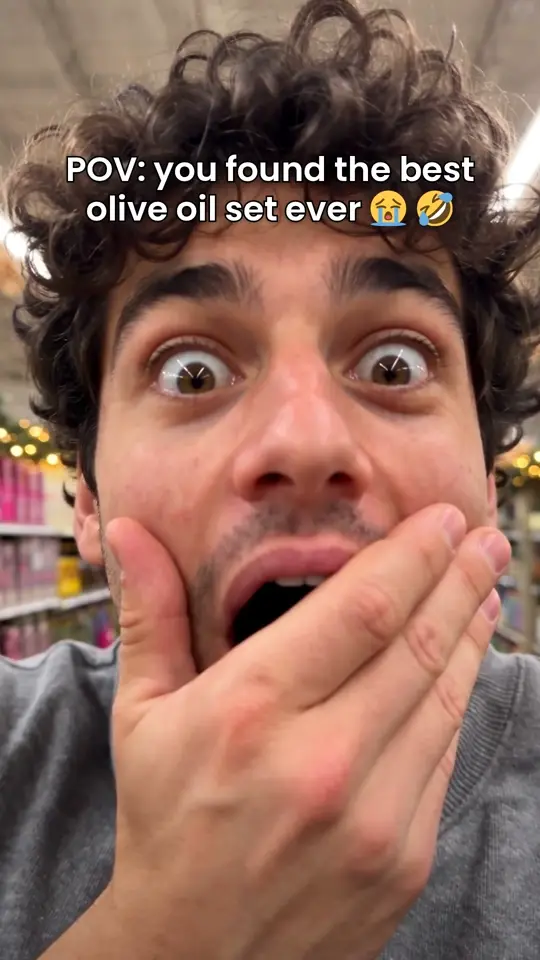
Here's how that could look for the olive oil store from our examples. The Reel hook is a real one. The rest is an illustration of how the pieces split up, so swap in your own products:
| Piece | Where it goes | Example for an olive oil store |
|---|---|---|
| Product image 1 | Feed post | The gift set on a kitchen counter, captioned with what's inside and who it suits as a present |
| Product image 2 | Story | One bottle up close with the current offer in a single short line |
| Carousel, 4 slides | Feed post | Slide 1 the hook, slide 2 the problem (bland weeknight cooking), slide 3 the set as the fix, slide 4 where to get it |
| Short video | Reel | "POV: you found the best olive oil set ever" as a cooking scene |
| First comment | Under each post | The product link and shipping detail the caption left out |
How do you post every day without repeating your feed?
Change the product or the angle every day and write a new hook each time, using only what your website says about your products, offers and audience. Pages that stall often post the same offer again and again, and followers learn to scroll past it.
The hook is the first line or first frame that makes someone stop. It should change daily, even when the product doesn't. Hooks from our examples show the range: a cooking POV for an olive oil store, a store-find that turns into a try-on for a gymwear brand, and "Sweater off. Now where?" on a train platform for a bag brand.
Your website is the best idea bank you have. It already lists products, features and offers you haven't posted about, in the tone you already use, and sticking to it stops you promising things you don't sell. Bravio works the same way: it learns only from your site and plans a different product or feature each day. Doing it by hand? The free social media post ideas generator gives you a starting list.
Here's a week you could copy for an online store:
| Day | Format | Angle |
|---|---|---|
| Monday | Reel | Product in use, filmed as a POV scene |
| Tuesday | Carousel | Answer one question customers keep asking |
| Wednesday | Image post | A second product, shown plainly with who it's for |
| Thursday | Reel | Before-and-after: life without the product, then with it |
| Friday | Carousel | Your current offer and what it includes |
| Saturday | Image post plus Story | Why you made the product or how it's made |
| Sunday | Reel | A quick how-to that uses the product |
How to turn comments and replies into followers and customers
Reply to every comment quickly and answer the actual question. Someone who gets a real answer from a business has a reason to follow it, and each reply keeps the thread active.
Make commenting easy. End captions with a question people can answer in a few words, like which color they'd pick. Use your own first comment for the link or the detail the caption skipped.
When a comment turns into a buying question, answer briefly in public and move the details to Messenger. For an olive oil shop, a reply could read: "Yes, that set ships in a gift box. I'll send you the link and delivery details in Messenger now." The public reply shows others you answer. The private one is where the sale happens.
Bravio adds your brand's first comment on every post, but its auto-DMs to commenters work on Instagram only. On Facebook, the replies and Messenger chats are yours to handle.
What is the 20 rule on Facebook?
There's no official Facebook rule called the 20 rule for growing a page. People usually mean either an old Facebook ads guideline about how much text could cover an ad image, or a loose rule of thumb that only a small share of your posts should be a hard sell.
If you run ads, check Meta's current advertising guidelines in Ads Manager rather than trusting an old blog post. For organic posts, the rule of thumb is the useful part.
Take this from both: keep text on images short so the product does the talking, make most posts helpful or fun, and save the direct pitch for a minority of the feed.
Should you buy Facebook followers?
No. Bought followers don't buy from you, don't comment and don't share, so they add a number and nothing else.
They also hurt. If you or anyone else judges your page by interactions per follower, a big block of accounts that never interact makes every real post look weaker. Meta's policy on inauthentic behavior covers fake accounts and artificial boosting, and when fake accounts get removed, your count drops with them.
Sellers pitch bought followers as a shortcut to looking credible. A careful buyer sees 20,000 followers and three likes per post and trusts the page less than a small one with real conversations. Treat any site offering free daily followers as a risk to your account, especially if it asks you to log in.
How much does Facebook pay for 1,000 views, and what is a 10,000-follower page worth?
Meta doesn't publish a fixed rate per 1,000 views, so any single number you see online is someone's estimate. Money only comes through Meta's own programs, such as Facebook Content Monetization, and a page has to meet Meta's Partner Monetization Policies and each program's eligibility, which you can check in the monetization area of your page's Professional Dashboard.
For a business page, that's the wrong number to chase. Your views pay through the customers they bring: messages, clicks and orders. A Reel with modest views that sends ten people to your product page did more for you than a viral clip that sold nothing.
A 10,000-follower page has no set price either. Its value depends on who those people are and whether they buy from that business. Selling or transferring accounts runs into Facebook's terms, and a bought page comes with an audience that followed someone else. The audience you build yourself is the one that buys.
A 30-day plan to grow a business Facebook page
Fix the page in week one, post every day after that, and review what brought follows at the end of the month. Don't expect a jump in week one. The goal of the first 30 days is a habit that runs and a clear read on which posts work.
At the end of the month, check four things per post in Facebook's Insights: new follows, reach, Reels plays and link clicks. Then count the Messenger conversations that started from a post.
Sort your posts by new follows and look at the top five. What do they share? Maybe a format, a product or a hook style like POV or before-and-after. Do more of that next month. Posts that reached people but brought no follows or messages tell you the hook worked and the follow-through didn't, so fix the caption or first comment before dropping the idea.
| Week | Focus | What you do |
|---|---|---|
| Week 1 | Fix the page | Clear profile photo, a cover that shows your product, a short About text, a call-to-action button and your website link. Start posting once a day. |
| Week 2 | Add Reels | Post short vertical videos next to your images. Use a different hook each time and note which ones people watch through. |
| Week 3 | Work the comments | Reply to every comment, add a first comment with a next step, and invite customers and contacts to follow the page. |
| Week 4 | Review | Compare posts in Insights, keep the formats that brought follows and messages, and plan the next month. |
How to run this daily without doing it all by hand
Pick a tool that creates the posts as well as publishing them, and decide how much control you keep. The hard part of daily posting is having something new every day, and a plain scheduler leaves that job to you.
Know the limits first. Bravio has no analytics dashboard, no ads management and no scheduler for your own uploads, so you'll still read follows and messages in Facebook's Insights.
With social media automation that makes the content, you paste your website once and get product images from your real photos, a four-slide carousel and, on video plans, a short video from the AI reel maker. On Facebook it publishes Posts, Reels and Stories, with your first comment on each post.
New brands start in manual mode, where nothing goes live until you press Publish. When you trust the output, switch to automatic posting at a daily time you choose. Our guide to running an automated social media account safely covers that switch, and plans start at $49 a month on the pricing page. The website scan is free without a card, so paste your URL and see what day one would post.
Related pages
Questions
- How long does it take to get more followers on a Facebook page?
- Expect weeks, not days, for steady growth from organic posts. Give a daily posting habit at least 30 days, then check which posts brought new follows and messages in Facebook's Insights.
- Is it worth buying Facebook followers?
- No. Bought followers don't comment or buy, so they make real posts look weaker next to a big follower count. Meta's inauthentic behavior policy covers fake accounts, and when they're removed your count drops.
- Do Reels help a Facebook page get more followers?
- Yes. Facebook can show Reels to people who don't follow you yet, which makes them the format best placed to bring in new viewers. Pair them with posts, carousels and Stories so those viewers find a reason to follow.
- How often should a business post on Facebook?
- Once a day is a realistic target for most business pages. Holding the same pace for months matters more than posting a lot in one week, so pick a rhythm you can keep.
- What should a business page post every day?
- Rotate between a product in use, a customer question, a before-and-after, an offer and a how-to. Feature a different product or angle each day with a new hook so the feed doesn't repeat.
- Can I automate Facebook posts and still approve each one?
- Yes, with Bravio. New brands start in manual mode, where nothing is posted until you press Publish, and you can switch to automatic daily posting at your chosen time whenever you want.
- How much does it cost to get daily Facebook content made?
- Bravio's Lite plan is $49 a month for daily images and carousels, Starter is $99 and adds 12 short videos a month, Growth is $199 with a short video every day, and Agency is $549 for up to three brands. Every plan starts with a 7-day free trial, and the website scan and brand profile are free without a card.
- Does Bravio show my Facebook follower analytics or reply to Facebook comments?
- No. Bravio has no analytics dashboard, and its auto-DMs to commenters work on Instagram only. You check follows in Facebook's Insights and answer Facebook comments yourself, though Bravio adds your brand's first comment on every post.